The Journey

Real talk. The writing is the easy part.

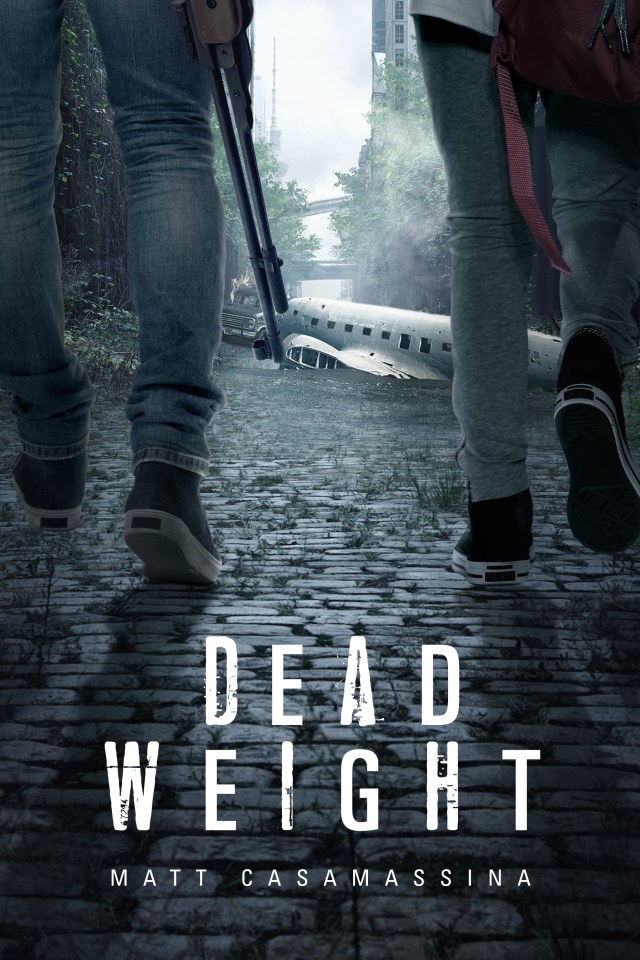
I finished my debut novel, Dead Weight, sometime in 2015. I can’t remember when, and I can’t be bothered to look, but it was during those early months and not the later ones. It’s December 2016 as I write this, and the book still isn’t out. Nearly two years have passed.

In all of that time, I’ve written the majority of my second book — more than 70,000 words — and I’m well into my third. I contracted covers for all of these works. I auditioned audiobook recordings. And I edited. And edited. And edited.

My experience with traditional publishing — an industry largely based out of New York, as I sit on the opposite end of the country — is that it’s slow. Not just snail slow, but the formation-of-the-Grand-Canyon slow. It seems to take forever to do anything, even converse, with anybody evenly remotely related to the publishing process.

Here’s what I’ve learned.

First, if you’re going to self-publish, very little of this applies, and go with God. You’re going to need him. There are literally tens of thousands of people on a weekly basis who are writing the next big thing, or so they believe, and they’re all about to flood iBooks and Kindle.

If, like me, you’re clinging to the notion that the old way is the best way, well, prepare for a reality check. You need an agent or publishers won’t even look your way. Not an agent you pay so that they’ll represent you — run from those criminals. No, you want real representation from a reputable agent, all of whom won’t accept a dime until you’ve landed a contract.

Occasionally, I read these wonderful stories about first-time authors who barely lifted a finger for wonderful six-figure deals, and that’s usually the point where I sweep my computer and monitor from my desk and go into a rage dance. (Three or four times a week.) I’m not envious. I’m seething with jealousy, for they are obviously in possession of talent and good fortune beyond my grasp.

My story is one filled with reedits. When I first approached an agency, Dead Weight was 135,000 words. Then, after a back and forth, it was 125,000. Then 115,000. Then 110,000. Then 100,000. And now, 95,000. And that’s still 15,000 words shy of where it should be, by some accounts. Prepare to kill your darlings, as they say. When you’re Stephen King, you won’t need to make those sacrifices, but in the meantime, you have to be marketable, and 80,000 words is easier to sell than 135,000. At least, it sure has been for me.

There is an upside to all of this, which is that as you snip and cut away paragraphs from your novel and down shots of bourbon, holding back tears, you will eventually realize that the exercise isn’t futile, but productive. Dead Weight is, in many ways, a better novel at 95,000 words than it was at 135,000. It’s tighter. And I have an agency to thank for that.

That being true, it’s been two years, and the process is only now nearing completion. You will query agents and you won’t even get responses. You will query others and get rejections. Some will read your novel and say it’s “not the right fit.” Just remember that the people who succeed — not just as authors, but in life — are those who refuse to admit defeat; those who press forward even when the path is totally obscured.
The Synopsis

I’ve been done with Dead Weight, my first book, for a dumb amount of time. I’ll write about all of that in a future post. Until then, I thought I’d provide the pitch that I sent potential agents as I struggled to understood this old-school, traditional side of publishing.

Dead Weight

Can a headstrong 17-year-old boy survive and find love at the end of the world?

This is the story of Zephyr Rockwell, a wealthy, small-town teenager who wakes from a night camping in the woods and discovers his girlfriend missing, all of her clothes left behind. Confusion gives way to panic and then terror as the boy learns that her disappearance is not an anomaly, but a statistic in a widespread phenomenon that seems to have swept across his hometown.

Everybody is gone. His parents. His friends. His neighbors. The entire population of nearly 30,000 residents. The streets are littered with abandoned cars, the only remnants of their inhabitants the clothes and shoes and jewelry and even fillings they wore. Television broadcasts static channels and live newsrooms with bodiless chairs. The Internet displays yesterday’s stories and no signs of activity.

What the hell is going on?

Ill-equipped and petrified, Zephyr embarks on a journey for answers and companionship in a world where great cities lay in ruins, resources grow scarcer by the day, and every other survivor is a potential threat.

Along the way, he meets a variety of characters, including a little girl named Jordan who lost her mom, an old man named Ross with a penchant for guns and alcohol, twenty-something twins who claim to have visited Area 51, and Aurora, the most beautiful girl he’s ever seen. Zephyr learns that despite the loss of so many millions, humanity remains, and all the wonder and magnificence of mankind with it. But also the brutality.

There are secrets waiting in California. Still, is the trek halfway across the country worth the risk? Zephyr and some of his new friends decide to find out, and not all of them will return.

The Point

Hi.

If you’ve landed here, it’s likely because:

  • You read one of my books (sorry)
  • You read some of my IGN articles (sorry)
  • You want me to help you with your iOS game (sorry); but send me an e-mail and I’ll redirect you to the right folks
  • You meant to type another URL (sorry)

This is the official (I guess) blog-thingy for the author Matt Casamassina. That’s me, writing about myself in the third-person, which isn’t creepy at all. I created this little area as a landing page for people who picked up one of my novels and have since come searching for the most direct route to send me hate mail. (By the way, there’s a contact link at the top of this page. Please, just no death threats. Or, make them colorful, at least.)

Now that you’re here, though, you may as well know who I am. You’ll be able to use some of these details in your rage mail, so it might be worth the read.

I’m a longtime video game and technology journalist published in a variety of popular newspapers and magazines,  and most important, one of the founding members of IGN.com. That’s a website whose acronym is basically meaningless these days, so don’t even bother. If you’re a jaded gamer, you’re no doubt thinking that the word ‘ignorant’ cannot be spelled without the letters I-G-N, and you’d be correct. You do need those letters to spell ‘ignorant.’ Otherwise, it would just be ‘norant.’ I feel like I’m veering way off course here.

Anyway, after spending a lifetime at IGN, where I wrote many articles and religiously covered Nintendo, I waved good-bye to that part of my life and joined Apple. (Mostly. You know I’m all over Switch.) Another lifetime later, I’m still at Apple. And that’s about all I can say about my job at this company because there are sniper lasers probing my chest and forehead. Lots of them. Seriously, gotta be a small army.

In addition to the thing that I do for Apple, I also write books. Specifically, dystopian fiction books featuring teenagers who wake up at the end of the world; and social science-fiction books about struggling twenty-something video game journos caught in the middle of high-tech conspiracies; and fantasy / science-fiction books about kids who find extraordinary, wonderful, and terrifying things in the depths of the earth.

As of this writing, I’m about to release my first novel, Dead Weight. I’m nearly wrapped with my second. And because I’m weird like that, I’m well into my third. (Broken brain.)

If you’ve got questions about my books, or, more likely, just want to tell me you hate me, please don’t be shy.